
CASE STUDY: INTEGRATED MARKETING CAMPAIGNThis firm understood their market deeply. What they didn't have was a system to turn that knowledge into sales — one that ran on its own instead of on the founder. So I built one.
THE CHALLENGEThe client is a marketing and PR firm serving K-12 education companies. Their prospects were staring down a deadline: ESSER funding — the federal pandemic-relief money that had padded school budgets was ending, which meant the companies selling to schools had to prove their worth fast or get cut.
This firm had a genuinely sharp take on that problem. But it lived in the founder's head and in one-off conversations — not anywhere a prospect could find it. They'd outgrown doing marketing in spare moments between client work, and they needed more than another campaign. They needed a system that could turn their expertise into real sales conversations without the founder driving every one.
How do you turn a strong point of view into a steady flow of the right conversations?
THE STRATEGYI designed and led an integrated campaign — Positioning to Promotion — built to guide prospects the same way they actually make decisions: first they notice you, then they consider you, then they're ready to talk. Each stage had its own job, its own content, and its own channels, so nothing depended on the founder being in the room.
Get noticed — Reach prospects right at their moment of need — the funding deadline — with insight useful enough that they start to see this firm as the expert. Blog content, downloadable guides, LinkedIn awareness ads.
Build trust — As prospects start weighing their options, show up as the partner who actually understands their situation. White papers, gated resources, LinkedIn lead ads, automated email follow-up.
Start the conversation — Turn interest into real sales conversations with proof and close coordination with the sales team. Case studies, LinkedIn retargeting, Google Search on the pages that signal buying intent.
THE EXECUTIONTen pieces of content, sequenced across three channels, all pointing back to the website where every interaction could be measured. It ran as one connected system — not a pile of disconnected tactics hoping something would stick.
LinkedIn did the heavy lifting
115 conversions came from LinkedIn — by far the strongest paid channel, bringing in leads at every stage. A clear signal of where to lean harder next time.
Search caught people ready to buy
A 7.6% click-through rate on Google Search, built around the keywords people use when they're already shopping — putting the firm in front of prospects at the exact right moment.
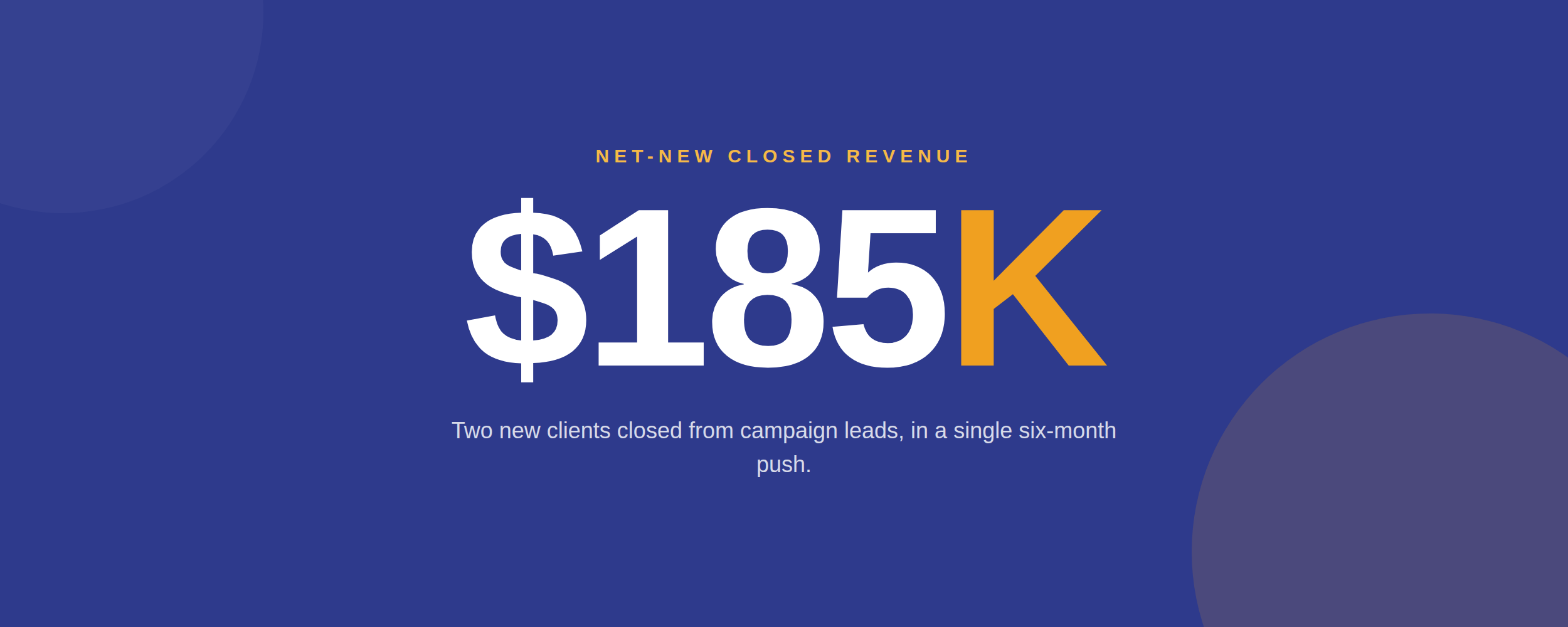
THE RESULTSA full, healthy funnel — not just traffic, but real movement from stranger to qualified buyer — that closed actual revenue.
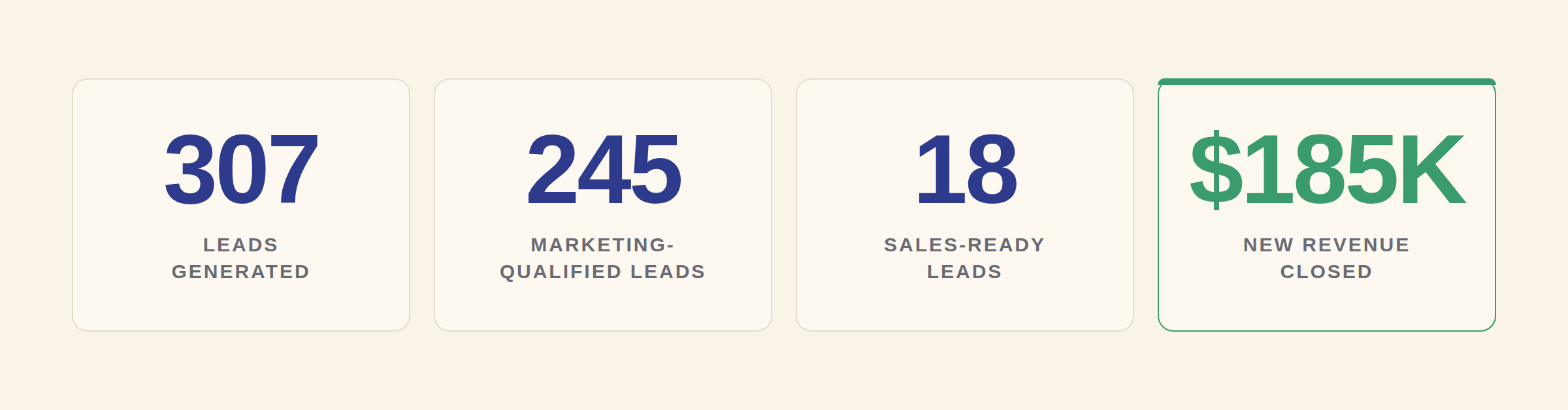
Engagement held up across the board. Leads stayed engaged across all three channels, not just one — proof the system worked as a whole rather than getting lucky in one place: Content 53%, Paid 44%, Email 24%.
WHAT WE PROVEDA clear point of view earns attention. Prospects gave real, substantive content their time, which beats hard-selling, especially to a savvy audience.
The data tells you where to go next. LinkedIn's standout performance became the foundation for the next phase, including testing video to reach people earlier.
A system beats scattered effort. Content, paid, and email reinforced each other instead of competing — and the system kept working without the founder steering every piece.
Ready to stop being the engine for your marketing?
I build marketing systems that turn your expertise into a steady flow of the right conversations — systems that run without you at the center of every one. Let's talk about where yours should start.